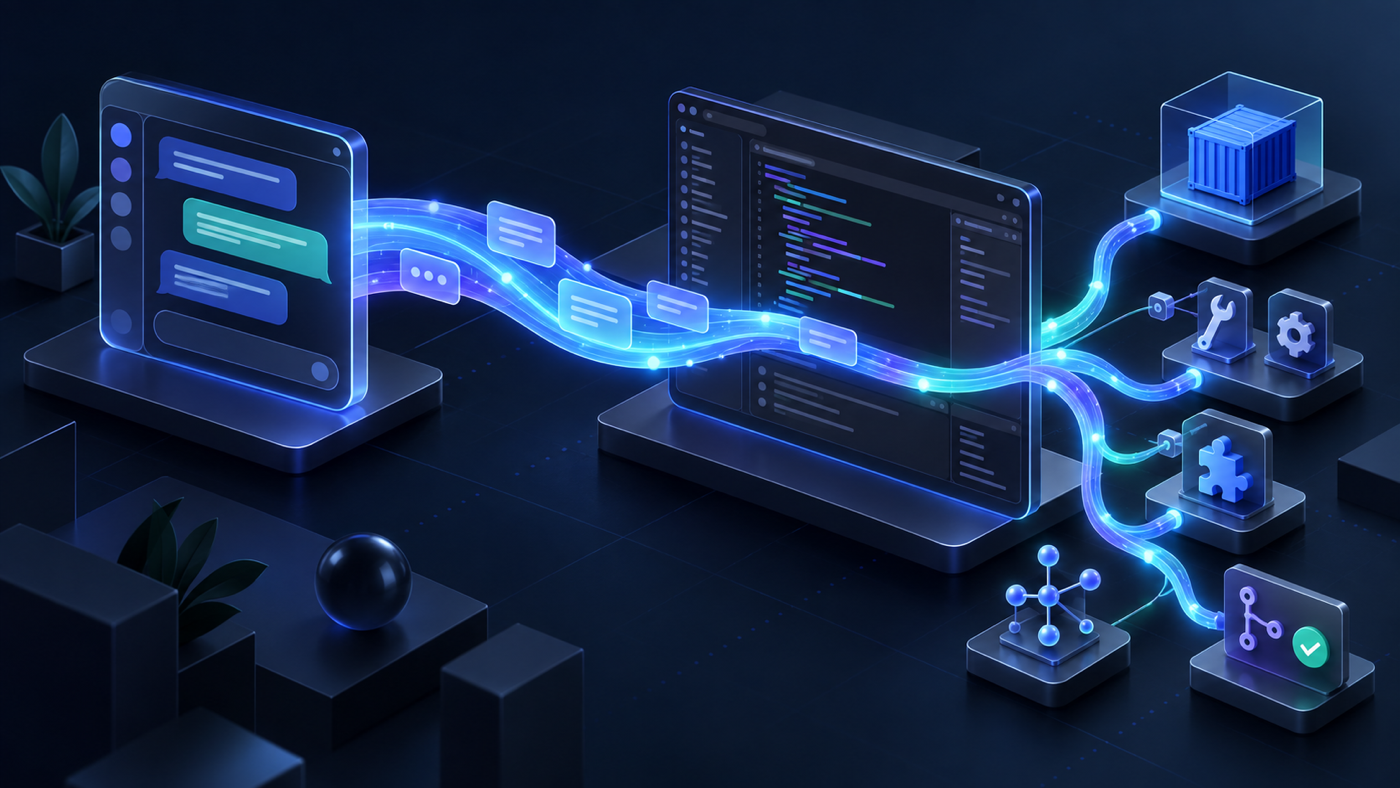
Microsoft’s VS Code 1.138 expands Codex support in its Agent Host, allowing developers to continue the same coding session between the ChatGPT app and VS Code without restarting the conversation.
Developers can also:
- switch between Copilot-backed and ChatGPT-backed models while preserving the current conversation;
- give Codex access to built-in, extension, and MCP tools in VS Code;
- move a workspace-less quick chat into a project folder or isolated worktree;
- run agent sessions inside local Dev Containers using the project’s configured dependencies;
- create pull requests directly from Agent Host sessions; and
- automatically mark inactive sessions as done after all their pull requests merge, with optional deletion after a grace period.
Local Dev Container support is rolling out gradually and requires Docker plus a supported Dev Container configuration. Automatic merged-session cleanup is opt-in and remains in preview.
Why it matters
Coding agents are becoming portable work sessions rather than assistants tied to one interface. A task can begin as a conversation, move into an isolated development environment, use project-specific tools, and finish as a reviewable pull request—all while retaining its context.
The open Agent Host Protocol also gives builders a foundation for creating clients that can monitor sessions, approve tool calls, review changes, and contribute tools across Codex, Claude, Copilot, and other compatible harnesses. This complements the managed context, tool, and execution infrastructure we covered in OpenAI’s Agents API and Codex harness: the emerging stack now includes both the agent runtime and a portable client-to-session layer.